AI Doesn't Save Us Time — And That's the Problem
AI doesn't save time — it shifts expectations. Productivity debt is quietly building in teams, and leaders need to address it before burnout sets in.
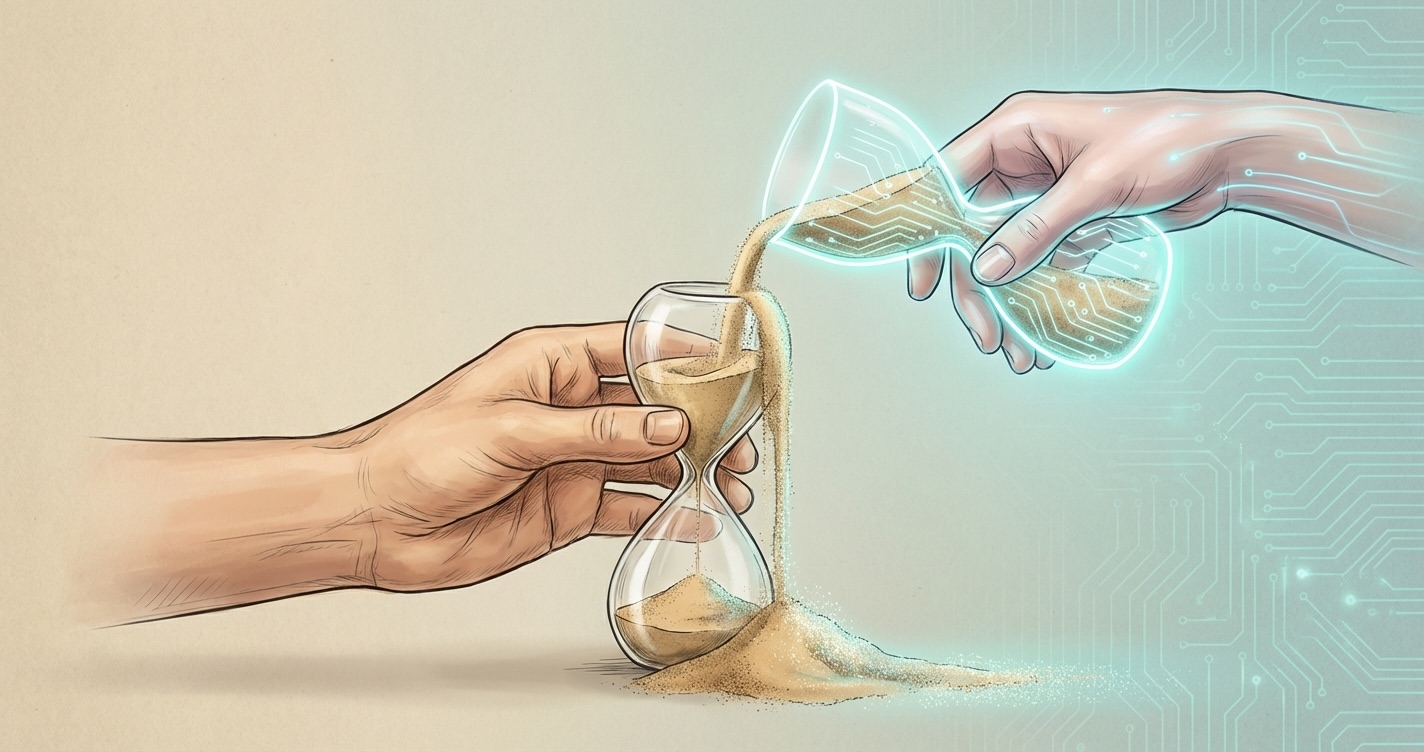
AI isn't handing us back hours in the day like we might have hoped, and like people say.
Instead, it's shifting what we expect to get done inside those hours.
I'm spending more time working, not less. And I don't think I'm alone in that.
The Productivity Debt Problem
Research backs this up. AI does make us more productive, but that productivity doesn't translate to shorter workdays. Instead, it raises the bar on what's expected in a standard work period.
I read about this recently and the author called it a "productivity debt." It's like a pressure to squeeze more output into the same hours, every single day. The ceiling keeps rising — but the clock doesn't change. It's waking up every morning and starting work like you're behind. And if you work hard enough or get enough done using these amazing tools, you might get to zero by the end of the day.
That's unrealistic. And it's unsustainable.
The problem is partly cultural. We've inherited mindsets from sports and performance worlds — the idea of "leaving nothing in the tank." Always pushing to give every ounce of effort. Giving everything, every time. It sounds admirable in the clubrooms. In a knowledge work context, repeated daily over months and years, it's a recipe for burnout.
We need to unlearn this if we want to use AI without burning out. The tools are getting better fast. Our habits need to keep pace.
Measuring the Impact Is Harder Than It Looks
Measuring AI's impact on productivity isn't straightforward — and the way we measure it matters.
For some roles, it's easier to track. Software engineers pushing more code, merging more pull requests — that's relatively clear. You can see it. But in service businesses or broader knowledge work, it's murkier. Output quality, client relationships, strategic thinking — none of these fit neatly into a dashboard.
One idea I've been toying with is multiplying an internal Net Promoter Score by revenue per human hour worked. It's a new metric, and it's not perfect. But it scales across different organisations and might better capture real productivity improvements — beyond just "time saved" or tokens consumed.
Simply measuring LLM token usage as a proxy for productivity isn't the right way. The way those tokens get used varies enormously, and poor use can actually drag productivity down, not lift it. Volume of AI interaction tells you very little about value created.
The Addictive Side of AI Tools
Another challenge that isn't talked about enough: AI tools can be addictive.
There's something genuinely compelling about the momentum they create. Tasks that used to take hours compress into minutes. That feeling can pull you toward doing more — always one more thing, one more iteration, one more output before you close the laptop.
Employees need to stay aware of their work hours. If they're consistently doing more than before without additional compensation, their effective hourly rate is quietly dropping. That's not good for them — and I'd argue it's not truly good for the business either, even if the spreadsheet says otherwise in the short term.
I don't think it's solely the employer's responsibility to manage this. But I don't think the answer is to leave employees to figure it out alone, either. We need to acknowledge that these tools create real pull, and offer some honest guidance alongside them.
HR professionals will correct this if it's not accurate, but: the cost of replacing a good employee hasn't changed much because of AI. Business context, team relationships, institutional knowledge — that's still largely human. Retaining staff remains a win-win for managers, shareholders, and employees alike. And if you're quietly burning people out, your reputation shifts in ways that are hard to see until the damage is done. People still buy from people. Culture leaks out.
The Hard Ask for Leaders
Leaders face a genuinely tough choice here.
It's counter-intuitive to hold a bit back when shareholders expect maximum growth. It feels strange to look at a set of tools that could unlock more output and deliberately choose not to extract every last drop of value from them. That goes against almost everything business and hustle culture has rewarded for decades.
But there's a real opportunity — for those willing to take it — to reclaim time and wellbeing for their teams. Enforcing clear clock-off times. Holding the line on no weekend working. Normalising the idea that not everything needs to get done today.
Leaving some productivity on the table every day is not just okay. It's necessary.
I suspect we'll start to see more attractive employment contracts become the norm as a result — higher salaries, fewer weekly hours, better benefits — because a stable, energised team that keeps showing up is just good for business. The maths will eventually become hard to ignore.
Who's Getting This Right?
Honestly? I don't know many organisations striking this balance yet.
That's partly why I'm writing this. If you know of companies leading the way — genuinely combining AI productivity gains with sustainable work practices — I'd love to hear about them. Please share.
Because valuing impact and quality over sheer volume of output is going to be crucial as AI becomes embedded in our daily work. The organisations that figure this out early will have a meaningful advantage — not just in output, but in the kind of culture that actually holds together over time.
The Bottom Line
AI is not a magic time saver. It's a productivity multiplier that shifts expectations.
We can either let those expectations run wild — accepting an endless escalation of what counts as "a good day's work" — or we can choose to lead differently.
That means starting honest conversations about where "productivity debt" is perceived as quietly building in your team (and remembering it's only perception). It means being willing to leave some fuel in the tank, deliberately, as a matter of policy and culture — not just when people happen to be tired.
Work smarter, not just harder. It's an old line. But with AI it's never been more important.
Thinking about AI for your business?
Have a conversation with Joe, your AI partner. No pitch, no pressure — just a practical discussion about where AI fits in your business and what a good first step looks like.
Get In Touch