AI Maturity: From Tools to an Operating Model
AI maturity isn't about stacking tools. It's about integration, context, and rethinking how AI fits into the way your organisation works.
One of the biggest barriers I see in AI adoption is the simple mistake of treating AI like just another software tool.
Leaders sometimes assume it's just another licence to buy and roll out. They're trying to drive a growth machine with one foot on the accelerator and the other on the brake.
Integration Over Accumulation
AI maturity isn't about stacking more and more tools. It's about integration, context, and fundamentally rethinking how AI fits into the way we work.
I have seen a framework for considering AI maturity in four levels, and it's one that makes sense to me. Level 1 is standalone tools doing isolated tasks. Level 2 embeds AI features inside existing software, like a chatbot or a recommendation engine. Most businesses I see sit here.
But the real challenge—and opportunity—is moving beyond that to Level 3, where AI acts as the connective tissue between systems. And the highest level, Level 4, is where AI becomes an operating system for the enterprise, shifting work from reactive analysis to anticipatory orchestration.
Leadership Is the Bottleneck
If you are a leader in your organisation, don't be the thing holding it back. If you aren't upskilling and creating a safe space for teams to share how they use these tools, the whole organisation ends up with one foot on the brake. Safe spaces to talk openly about AI use are essential, because without that, knowledge stays siloed and adoption stalls.
Rip Up the Process Playbook
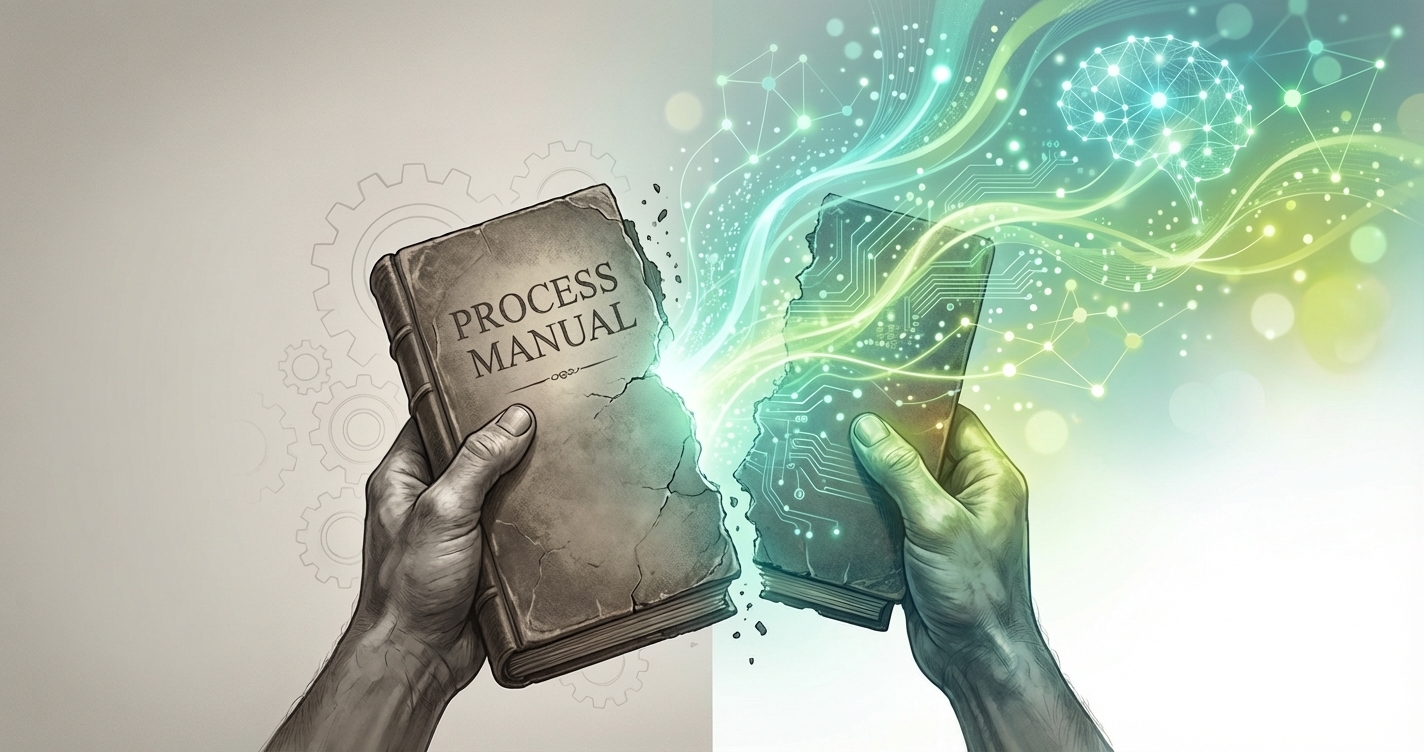
When we align AI initiatives with broader digital transformation, the leap of imagination is huge. It's not about adding an AI step to an existing workflow and moving the human in the loop one step further through. It's about ripping the process playbook up completely.
We start with this question: "What's the outcome this process is really aiming for?" From there, designing the fastest, highest-quality AI version of that workflow becomes obvious.
Human-first design matters here more than ever. How does a human expect to interact with this process? Where must they be involved? What makes their life easier both in providing input and actioning outcomes? If the AI fits human habits and expectations, it gets adopted. If it doesn't, it dies on a shelf.
Measuring What Matters
Measuring AI maturity beyond tool adoption is tricky. I like the idea of revenue per staff hour worked, but I'm even more intrigued by multiplying that figure by net promoter score. It gives a clearer picture of how AI is impacting both productivity and customer satisfaction.
But AI maturity is also deeply personal within organisations. There'll be power users and sceptics, so any aggregate score is imperfect. That's one of the next big challenges for companies investing heavily in AI technologies—how to measure meaningful progress.
Who's Leading the Shift
Industries leading this shift? Software development is an obvious one. Code lives in context-rich projects, so AI agents inside those projects have everything they need to take on tasks faster and better. Developers become supervisors of AI agents rather than writers of the code.
Digital marketing teams across sectors are also ahead. They're tech-savvy, always juggling more than they can handle, so they adopt AI quickly to get a leg up.
What I want to see more of are senior leadership teams becoming the most advanced AI users in their organisations. If that happens by learning from power users lower down the chain, even better.
The Journey Starts With Leadership
AI maturity is a journey from fragmented tools to integrated operating models—and that journey starts and ends with leadership, culture, and reimagining how work actually gets done.
If you're running a business or leading a team, my best advice is this: Don't treat AI like just another tool. Learn the extent of the possibilities it unlocks for operating a business, and take the time to understand what it really means to embed AI into your operating model.
Create the space for people to share, learn, and experiment. Rip up your process playbook and start with outcomes, not tools.
And measure progress in ways that matter—productivity and customer experience, not just tokens consumed.
Thinking about AI for your business?
Have a conversation with Joe, your AI partner. No pitch, no pressure — just a practical discussion about where AI fits in your business and what a good first step looks like.
Get In Touch