The Projects We Never Launch: Pursuing Real-World Validation Over Theory
Building in theory feels safe but teaches you nothing. Real-world validation — trusted testers and a willingness to risk public failure — is how projects grow.

The biggest hurdle I faced launching a public project wasn't a technical one. It was the risk of public failure.
You can build something perfect in theory, but until you put it out there, you don't really know if it works.
That gap between theory and reality is where so many projects stall.
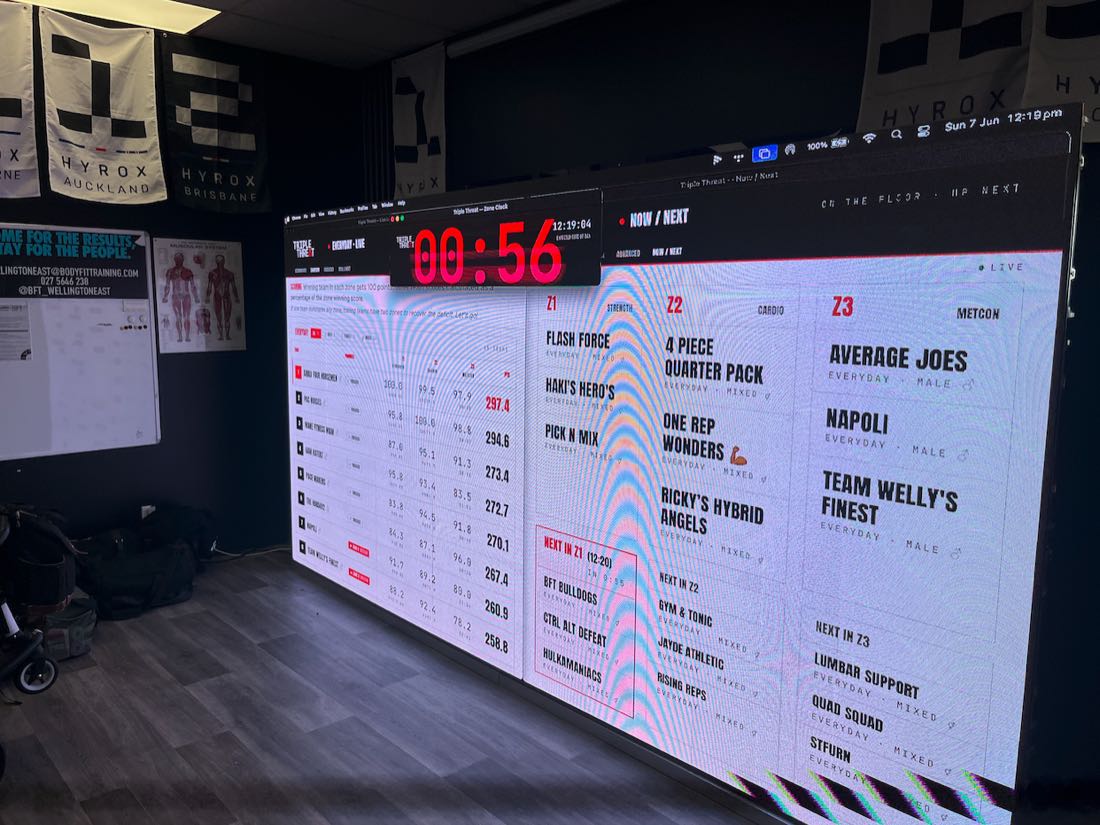
The Live Leaderboard I built for a fitness competition called Triple Threat.
Building in theory feels safe — and teaches you nothing
Building in theory gives you comfort. It feels safe.
But it lacks real value and, crucially, the learning you only get when real users interact with your work.
Choose your arena, then invite testers who won't pull punches
I've found that choosing the right arena to prove yourself is vital. For most people, that doesn't mean a public fitness competition with 200 competitors! You have to pick wisely where you put yourself on the line.
One of the smartest ways to bridge this gap is using beta-launches. Inviting a trusted cohort of rigorous testers who know their stuff — and won't pull their punches — gives you invaluable real-world validation.
They provide honest, actionable feedback so you can course correct before going fully public.
Modern tooling makes iteration cheap
Technically, modern tools make this easier than ever. I build everything inside GitHub repos from the start. Even projects that aren't traditional software get this treatment.
This approach keeps me agile, lets me roll back if I make a catastrophic mistake, and makes collaboration easier.
Frameworks like Next.js, combined with cloud services like Supabase and Vercel, plus TypeScript and Motion for smooth UI, enable rapid, reliable deployment and iteration.
The hardest barrier is psychological
Still, the psychological barrier remains the toughest.
Fear of failure — especially public failure — can freeze us. It's a natural reaction.
But confidence grows from real-world proof, not just planning.
The more you launch, get feedback, and adjust, the more that fear fades.
Adopt a 'have a go' mindset
That's why I encourage a 'have a go' mindset. Take your ideas to real users — even on a small scale. If you're building inside an organisation, share your work, get others to use what you created. They're guaranteed to use it in ways that are different to what you expect or intended, and that information is what makes something successful.
Small-scale user validation is the only way to truly assess your idea's worth.
You are almost never your own target audience. Assuming you are can cost you time, tokens, and dollars.
Sharing personal growth stories and vulnerabilities is part of this journey for me. Seeing others take that leap helps me take mine because we're all learning together as we solve these problems.
Launching publicly isn't about perfection. It's about learning, growing, and testing what really matters — even for my consulting clients I'm clear that what we build will absolutely not nail it first time. I prefer to get tools into the hands of the team as early as possible, and spend as long as we can making it fit their ways of working. For me, that creates excitement, starts the learning process early, and gives us good runway to make the tools fit.
Stop waiting for perfection
If you want to build something that lasts, you have to embrace the messy, unpredictable real world — it is the process.
The projects we never launch live in theory and never grow.
But real-world validation — with trusted testers, modern tools, and a willingness to risk failure — is how we find what really works, and why you assumed wrong.
Stop waiting for perfection and start launching — it's a lesson that has taken me a long time and many silently killed projects to learn.
Have a go. Test your ideas with real users. Learn faster. Build better.
Thinking about AI for your business?
Have a conversation with Joe, your AI partner. No pitch, no pressure — just a practical discussion about where AI fits in your business and what a good first step looks like.
Get In Touch